Address
304 North Cardinal St.
Dorchester Center, MA 02124
Work Hours
Monday to Friday: 7AM - 7PM
Weekend: 10AM - 5PM

Address
304 North Cardinal St.
Dorchester Center, MA 02124
Work Hours
Monday to Friday: 7AM - 7PM
Weekend: 10AM - 5PM

A patent is the exclusive right granted to an inventor to manufacture, use, sell, or import the subject matter of an invention for a specified period. The official document certifying the exercise of this right is referred to as a “Patent Certificate.”
A patent grants the authority to prevent unauthorized use of a technical invention by third parties. This right ensures the protection of the inventor’s labor and incentivizes innovation.
Within the framework of protecting industrial property rights, patent applications represent the most critical step in the process of registering and securing an invention.
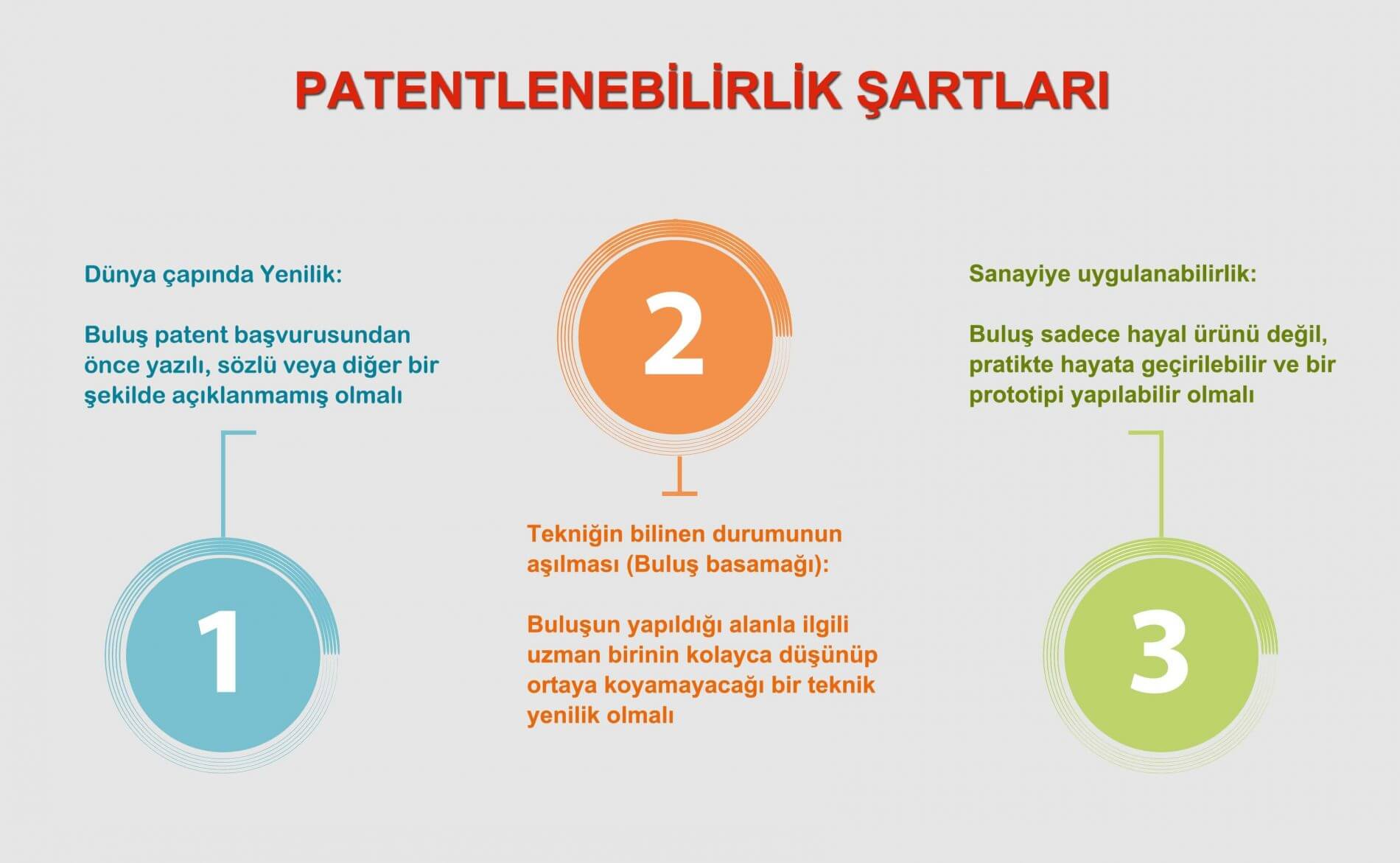
For an invention to be protected by a patent, it must strictly satisfy specific legal criteria. For researchers and entrepreneurs at Istanbul Aydın University, this process is essential for achieving global registration of innovation.
Patentability is measured not only by the novelty of the idea but also by its technical advancement and practical feasibility. These three conditions must be met simultaneously.
Novelty: The invention must not have been publicly accessible anywhere in the world (via written, oral, or usage means) prior to the date of the patent application.
Inventive Step: The invention must possess a quality that is not obvious to a person skilled in the relevant technical field, given the state of the art.
Industrial Applicability: The invention must be capable of being manufactured or utilized in any branch of industry, including agriculture.
Discoveries involve revealing existing but previously unknown objects or phenomena in nature and are not patentable. However, the use of a discovered substance to solve a technical problem may be subject to a patent. For example, finding that a known substance is resistant to mechanical shocks is a discovery and cannot be patented. Conversely, manufacturing railway sleepers from this substance is an invention and is patentable.
Scientific theories are broader forms of discoveries, and the same rules apply. Since they do not express a technical rule, they are not considered inventions. For instance, a physical theory regarding superconductivity cannot be patented, but new superconducting devices and methods for their production can be.
Mathematical methods are abstract or purely mental processes and are thus ineligible for patents. For example, a shortcut method for division cannot be patented. However, a device that performs such a calculation can be patented.
The common factor in plans, rules, and methods concerning mental, game, or business activities is that they do not provide information regarding a technical activity; therefore, they are not patentable. For example, methods developed for language learning or solving puzzles cannot be patented. Nevertheless, devices developed for playing a game can be patented. (The USPTO also protects board games with patents.)
As a concept, a computer program encompasses instructions for operating a computer. In terms of problem or system analysis, program flow charts, and coding stages, computer programs do not benefit from patent protection. However, they may be protected under Copyright Law. Nevertheless, a computer program can qualify for patent protection when combined with a device. For example, word processing programs alone are not patentable, but the control of traffic lights via a computer program can be. (The USPTO also protects software via patents.)
Aesthetic Creations: Aesthetic creations are artistic arrangements that appeal to the human eye and taste. Patents are not granted for these creations as they possess non-technical characteristics and require subjective evaluation. For example, paintings, sculptures, and architectural drawings are not patentable. However, devices or methods used in the realization of aesthetic creations may be patented. For instance, while a pattern on a fabric is not patentable, the device or method that applies this pattern to the fabric can be. Furthermore, aesthetic creations can be protected by industrial design registration, which falls under the jurisdiction of the Turkish Patent and Trademark Office.
Presentation of Information and Biotechnology: Methods concerning the compilation, organization, presentation, and transmission of information that lack a technical aspect are considered non-technical procedures and are not patentable. For example, information presented on the internet is not subject to a patent, whereas the devices that assist in presenting this information can be. Specific boundaries are drawn regarding the patentability of living organisms. Research in biotechnology is high-cost and long-term; therefore, biological inventions should be supported by patent protection. However, if developments in this field do not constitute an invention—for example, if they lack an inventive step or are merely discoveries—they must be excluded from patent scope.
Plant and Animal Varieties: Plant varieties can be obtained through modern biotechnological methods as well as traditional methods and are protected in our country under Law No. 5042 on the Protection of Breeders’ Rights for New Plant Varieties. For animal breeds, Animal Breeding Law No. 4631 is in effect. Consequently, despite having the character of an invention, a developed plant variety or animal breed is excluded from patent scope to avoid double protection. Additionally, essentially biological processes used in their production, such as completely natural processes like crossing or selection, are excluded from patent scope as they do not constitute an invention. On the other hand, an exception has been made for microbiological processes and the products obtained from them; patent protection is provided for developments in this area.
Medical Methods and the Human Body: It is stipulated that all treatment methods, including surgery, to be applied to the human or animal body, as well as diagnostic methods to be applied to the human or animal body, cannot be protected by patents. The simple discovery of the human body and its elements is not patentable. Simple discovery refers to the isolation or production of these elements from their natural environment using routine, known, and simple techniques. Even if the element obtained is a gene sequence or partial sequence, such a simple application is outside the scope of patent protection. An element isolated from the human body or produced through another technical process may be patentable. Elements isolated or otherwise produced from the human body lead to significant developments in the treatment of diseases. Therefore, the aim is to encourage research that yields these naturally occurring elements through the patent system. Consequently, elements of the human body obtained through such processes, including gene sequences or partial sequences, are included within the scope of patent protection despite existing naturally.
Public Order and Morality: It is stipulated that certain biotechnological inventions be excluded from patent protection even if they meet patentability conditions. These exceptional cases are based on the finding that such inventions are contrary to public order or general morality. Therefore, the article excludes human cloning processes, processes for modifying the genetic identity of the human germ line, the use of human embryos for industrial or commercial purposes, and processes for modifying the genetic identity of animals that may cause them suffering without providing significant medical benefit to humans or animals, as well as inventions related to animals obtained from these processes, from patent protection.
From the perspective of industrial property, protecting your invention with registration creates a defensive perimeter against rival firms and products. This protection establishes you as the legal right holder against potential infringements. It serves as a clear defensive instrument in legal disputes and provides a form of monopoly right for the goods and services produced.
In terms of marketing, if your invention is not protected by a patent, others may benefit from your marketing efforts, advertisements, and promotional expenditures. A patented product provides a competitive advantage over rival products. For new entrepreneurs, it is the most effective and straightforward way to attract investors.
It is possible to generate income by permitting other individuals or institutions to use a patent-protected product or invention through licensing. For example, the revenue Philips generates from DVD technology patent licensing exceeds the revenue from the product itself. In terms of prestige, being a patent-holding individual or institution is the clearest way to be recognized as innovative.